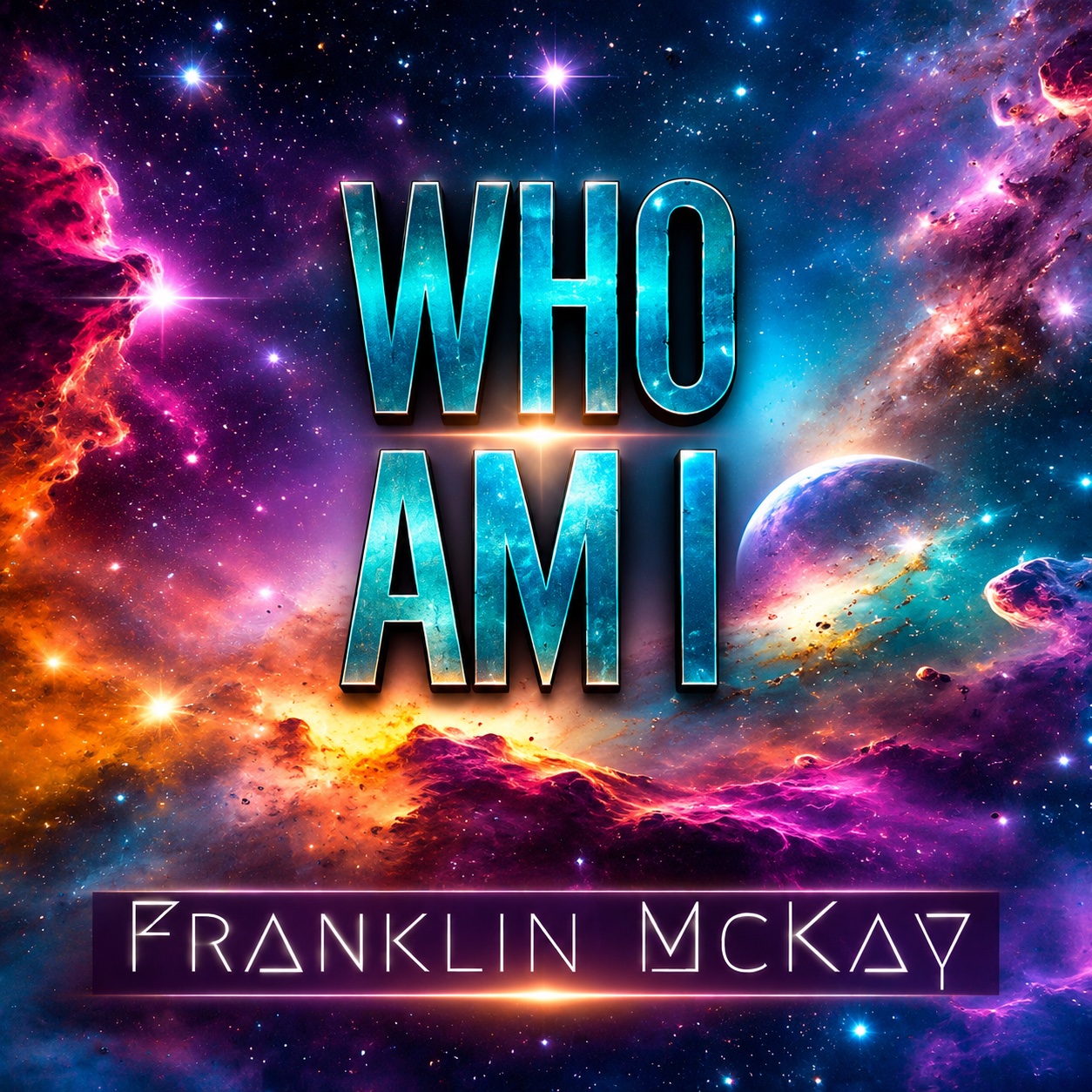
Who are we? Why are we here?
“Who Am I” asks the biggest questions there are — who we are, why we’re here, and what comes after this life — and it asks them the way only a great pop song can: plainly, directly, and with a melody that carries the full weight of the question.
It opens in a place of not-belonging. “I’m sitting in a place where I don’t know if I belong. Is this but a school for the suffering heart to write a song?” The emotions run like stairways to the sky, and the resolve holds even as the wondering continues: “Don’t give up. Don’t give in. But I’m still wondering why.”
And then the question that gives the song its name — asked twice, because once isn’t enough: “Who am I? Who am I? Without this skin, am I anything?” It is the oldest question there is, asked in the plainest possible language: stripped of the body, of the skin, of the name — what is left? “Am I out of time when I lose my mind?” The song doesn’t flinch from it. It sits inside the doubt and keeps asking: “Should I believe there’s more than this life? Can I believe I’ll see your face again?”
The answer it finds is not a doctrine but a decision: “I need to believe in something more, to believe in the power of love.” That is the song’s spine — the conviction that belief itself is a choice, and love is the thing worth believing in. “I’ve tried to figure out this game from the inside of doubt, and the more I dance with it, the more I trip out.” But the resolve returns, and with it the song’s most luminous image: “Don’t give up. Don’t give in. One day we’ll be just like stars.”
And here is what makes the song work as a piece of pop craft, not just a philosophical exercise. The existential weight is carried by a melody that is accessible and emotionally direct — this is a pop song in the best sense, melodic and unguarded, the kind of record that sits naturally alongside Justin Bieber and Maroon 5: big feeling, plain language, a chorus that asks the question so plainly you can’t look away from it. It’s from the album Awake, and the songwriting is the point: the question is enormous, but the writing is intimate, and that tension is what gives the song its pull. The “just like stars” payoff lands because the song has earned it — it has spent three minutes in the dark, in the doubt, in the not-belonging, and then it lifts its eyes to the sky. That is the craft: a song that asks “who am I?” and answers, not with certainty, but with the stars.
If you love Justin Bieber or Maroon 5, this one’s for you.